
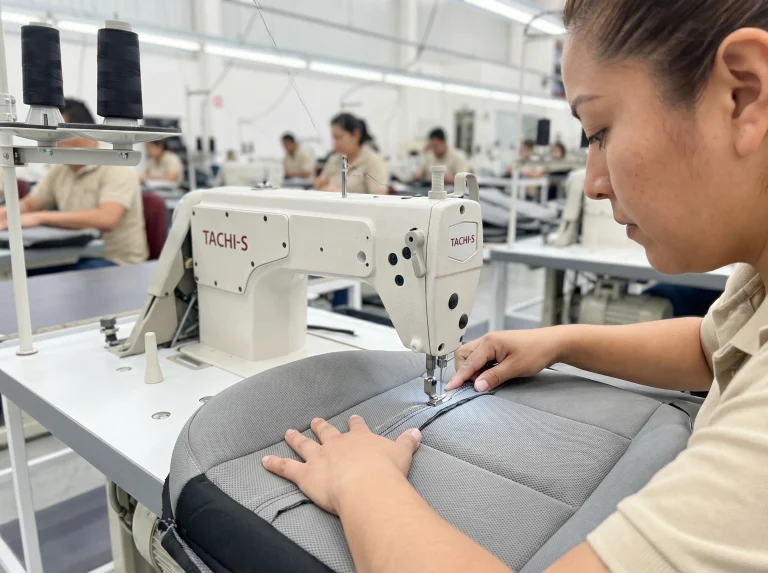
The “SEW” process refers to the stitching and joining stage of materials used to create seat covers and upholstery.
During the SEW Tachi-S, meticulous stitching operations are performed to join materials such as fabric, leather, or vinyl, incorporating reinforcements and details that enhance functionality, durability, and seat aesthetics.

SEW comes from the term sewing. This process focuses on the precise joining of textile components, enabling customized designs, high-quality finishes, and durable seat structures.
Creation of unique designs through specific patterns and decorative details.
High-quality stitching that extends the lifespan of seat covers.
Finishes that reflect quality craftsmanship and attention to detail.
Direct influence on seat shape, texture, and ergonomics.
Refers to the process of joining two or more materials using adhesives instead of mechanical fastening methods such as welding, rivets, or screws. This technique ensures a clean finish and strong, uniform adhesion.
This sewing technique is used in the manufacturing of automotive seat covers. It employs multiple needles on a specialized sewing machine to create wider, stronger, and more durable seams in seat upholstery.
This process involves the precise attachment of ISOFIX components to the seat upholstery, ensuring compliance with child seat anchorage requirements and contributing to vehicle safety standards.
This process consists of applying seat labels to manufactured products. The labels may include brand logos, serial numbers, or safety information and are applied carefully to ensure accuracy, uniformity, and compliance with regulations.
Grommets are strategically installed in specific areas of the seat where functionality is required. This may include locations for securing straps or for adjusting seat control elements, ensuring durability and proper performance.

FRAME

FOAM

ASSY

CUT

SEW

MECHANISM

LAMINATION